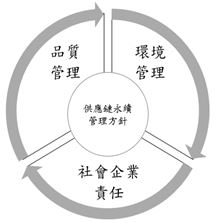
To establish long-term, stable partnerships with suppliers and uphold sustainable management as our vision, Ultra Chip Inc. integrates quality management, environmental protection, and corporate social responsibility into its sustainable management policy, and formulates supplier management procedures accordingly. Relevant details are as follows:
A. Supply Chain Sustainable Management Policy
(1) Quality Management Dimension:
Require suppliers to pass ISO 9001 Quality Management System certification.
Require suppliers producing automotive products to pass IATF 16949 Automotive Quality Management System certification.
(2) Environmental Dimension:
Require suppliers to comply with factory environmental management laws and regulations.
Require suppliers to comply with hazardous substance regulations (e.g., RoHS, REACH, Halogen-Free…).
Verify suppliers' implementation status regarding environmental protection, energy conservation, and carbon reduction.
(3) Corporate Social Responsibility Dimension:
Require suppliers to adhere to CSR-related standards and norms.
Require suppliers to comply with the Conflict-Free Minerals Policy.
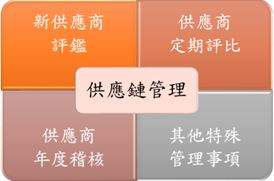
B. Supply Chain Management Procedures:
(1) New Supplier Evaluation:
Before a new manufacturing supplier is listed as a qualified supplier, an evaluation is conducted focusing on key operational areas, including quality system management, engineering capabilities, production quality management, and environmental management requirements… etc. An audit team—comprising personnel from Quality Control, Engineering, Procurement, and other relevant departments… etc.—is formed to conduct supplier audits and request corrective action plans for any identified deficiencies, ensuring new suppliers meet Ultra Chip's quality standards.
(2) Periodic Supplier Assessment:
On a quarterly basis, 100% of suppliers meeting the production volume threshold are evaluated and scored across categories including quality, technical capability, pricing, delivery lead time, and production services. Suppliers failing to meet Ultra Chip's required scores must execute corrective actions, which are subsequently verified by the Company. If performance remains unsatisfactory, actions such as reducing purchase orders, suspending procurement, or revoking qualified supplier status will be enforced to maintain product quality stability.
(3) Annual Supplier Audit:
To verify the thorough execution of system and quality management among qualified suppliers, an annual audit team (comprising Engineering, Quality Control, Procurement, etc.) is convened to perform audits on 100% of suppliers meeting production thresholds in accordance with ISO 9001 requirements. During audits, guidance and improvement suggestions are provided, and suppliers must submit corrective action plans with specified timelines. Suppliers are graded from Level A to E based on audit outcomes. In 2025, vendor audit results were 54.5% Grade A, 39.4% Grade B, and 6.1% Grade C, with approximately 93.9% rated as good (Grade B or above). Future business allocation (order reduction, production suspension, or qualification revocation) will be adjusted based on these results.
The annual audit scope also encompasses green product management and supplier ESG self-assessment questionnaires to ensure regulatory compliance and fulfill corporate social responsibility.
(4) Capability Enhancement & Knowledge Seminars:
The Company convenes monthly meetings with suppliers to discuss real-time production quality, process capabilities, customer requirements, and international regulatory trends, strengthening partnerships and mitigating risks associated with rapid macro-environmental changes.
Per the Supplier Management Regulations ( 02-DOC-019 ) , the Company stipulates "Quality System Management Capability Assessment for Suppliers," regularly auditing partners to ensure compliance with environmental, safety, and health regulations to enhance corporate social responsibility.
Promote and communicate to suppliers and subcontractors the strict prohibition against using or accepting "conflict minerals" sourced from the Democratic Republic of the Congo (hereinafter referred to as Congo) and its adjoining countries and regions.

